


The UNIC website uses cookies to improve your experience. Read our full Cookie Policy here.
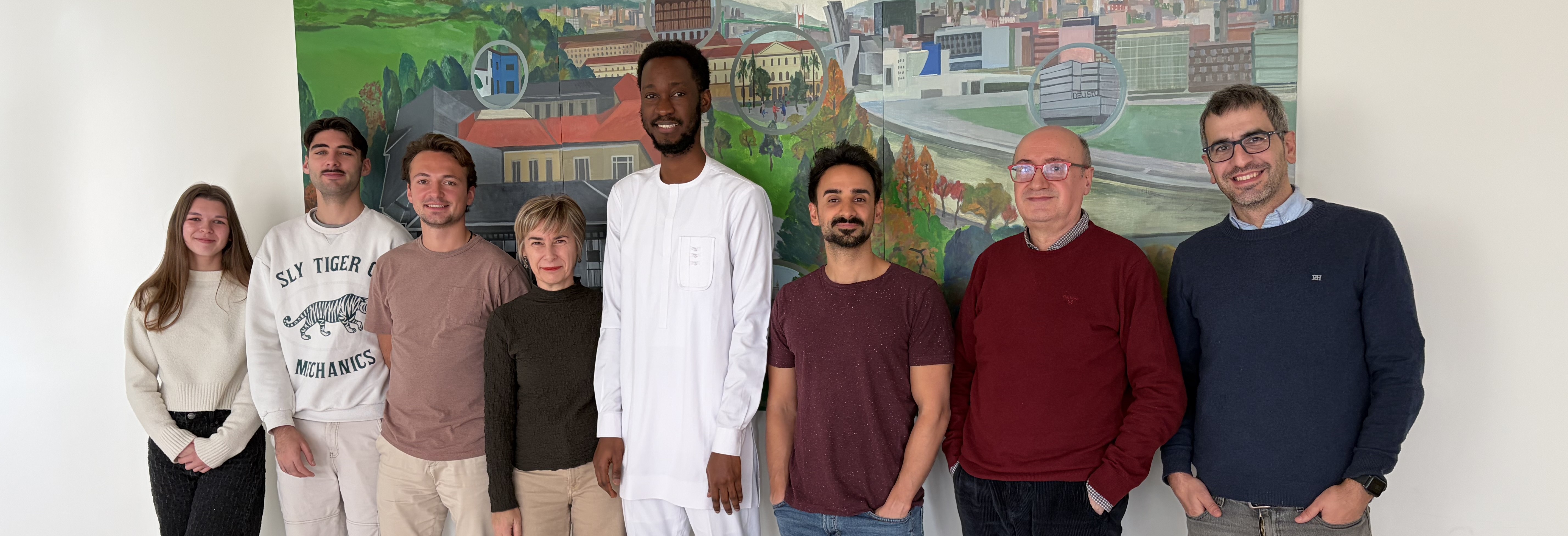
Arriving in a new city always presents a challenge: adapting, learning, and finding a way to contribute something valuable. For Osayande Godwill Omorose, a Master's program in Urban Business and Development student at Malmö University, his time at the University of Deusto was much more than an academic journey. This internship was an experience that combined applied research, international learning, and personal discovery.
With a background in finance and economics, and work experience in financial services and entrepreneurship in his native Nigeria, he arrived with a keen interest in food sustainability. His time at Deusto allowed him to work with a multidisciplinary team, hone technical skills, and build international connections. As he explains, “I arrived as a student and I am leaving having learned how to research and work in an international environment.”
The opportunity arose within the framework of the European University of Cities in Post-Industrial Transition (UNIC) Alliance. During this period, he joined the European project “Precious,” focused on preventing and reducing food waste. There, he combined data analysis, literature review, and the study of the socioeconomic determinants of waste in different European countries. “It is an issue that cuts across all dimensions of sustainability: economic, social, and environmental. That is why it is so relevant to the city and to public policy,” he says.
Rebeca Cortázar, professor at the Faculty of Engineering, explains that the initiative is part of UNIC's Thematic Line 2, “Sustainability and Green Cities,” with the aim of offering internships to students:
"With this pilot program we sought to offer research stays in university environments, where students could address real challenges related to cities. This proposal came from DeustoTech, reached Malmö, and finally brought Osayande to Bilbao."
Per Hillbur, Associate Professor of Environmental Science at Malmö University, considers the cooperation between both universities the key to ensure the success of this initiative:
"In order to make these internships possible and ensure that the exchange is of the highest quality, cooperation is required between the universities, their international offices and academics on both sides. Deusto provided a team of several people to combine Osayande's expertise in economic analysis with the more technical aspects of reducing food waste. This was a very successful collaboration that we hope to develop further in 2026 and beyond within UNIC."
An exchange of perspectives and learning experiences
Thanks to this coordination efforts, Osayande quickly integrated into the group. The work was supervised by faculty from the School of Engineering and Deusto Business School, allowing him to approach the problem of waste from different perspectives. This collaboration not only enriched the student, but also provided a source of reflection for his mentors.
Manuel Amador Cervera highlights how this global perspective forced them to step outside their comfort zone: "His experience and knowledge of the food sector primarily stem from his country, Nigeria. In countries with socio-economic situations as different as ours, not only is the problem of food waste different, but so are the means of addressing it. This enriches both the project and us as researchers, because it helps us to better understand different contexts and increase the representativeness of the analyses. We cannot design global solutions with local perspectives."
For his part, Alberto de la Calle describes the experience as a “lever to boost collaboration” that shook up the team's routine: "His incorporation brought a fresh perspective; someone outside the project is not conditioned by the group's previous inertia, which forces us to ask ourselves new questions, and that exponentially improves the work dynamics. In addition, linking an internship to this kind of project is particularly interesting because it provides a clear and meaningful context for the student's work. They don't just come to explore something, but are part of a larger project. In my opinion, this helps students start from a more solid foundation, with clearer objectives, and see that their stay and work contribute to the development of something beyond a one-off activity."
Miguel Ángel Larrinaga, emphasizes the human dimension and admits that the student's evolution transformed his own vision of the program: "This experience has been very enriching. Personally, it has allowed me to see reality with a wider perspective: to feel gratitude for where we were born, where we live, and with whom we work, and to value the effort people make to live better. Weekly monitoring a student's work is very demanding, but it allows us to see their progress. It's incredible how much Osayande has achieved in this period. What we learn from students´ efforts is as valuable as what they learn from our techniques and knowledge."
Prepared for global challenges
For Osayande, each meeting was a lesson in critical thinking and autonomy. He learned how to organize his work, give presentations, and communicate his progress on a weekly basis:
“Academically and professionally, this internship has provided me with a real-life scenario of what research implies. It is, in fact, my first experience in a European work environment, which is very valuable for my future.”
His learning was not limited to the work environment. UNIC opened the door to human connections and friendships. Although he acknowledges that the language barrier outside the university was a challenge, he leaves with greater cultural awareness. "Solving global challenges requires different life experiences that allow us to anticipate different scenarios. This mobility has prepared me to integrate into diverse teams," he says.
This story demonstrates that UNIC truly fosters intercultural understanding and social responsibility. Internationalization and applied learning are intertwined in an experience that leaves a mark on students and faculty, showing that when people work together, learning transcends borders and transforms lives.
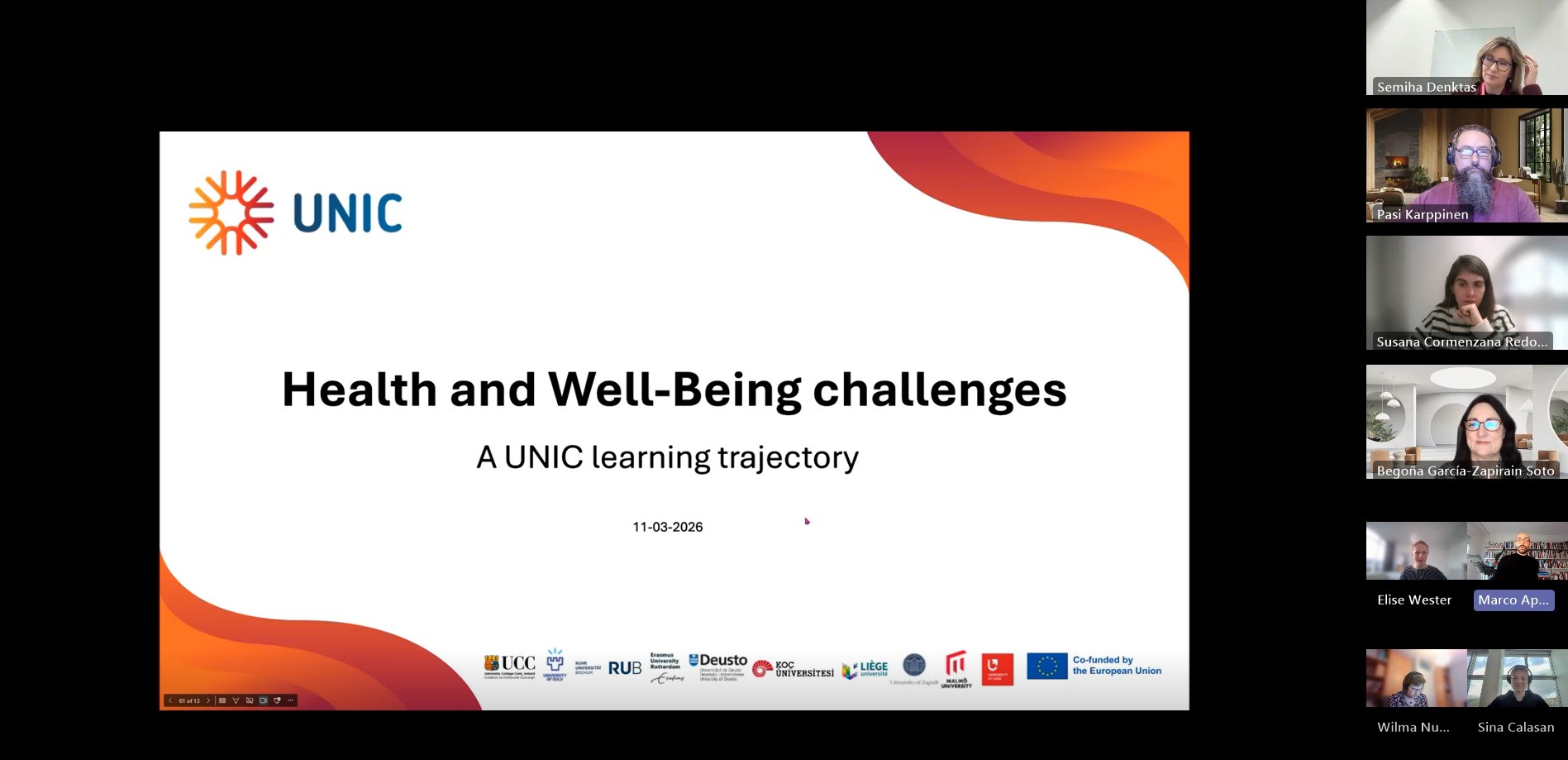
Health and Wellbeing Grand Challenges Online Module
The UNIC Grand Challenges online module was a joint interdisciplinary module between Erasmus U...
11 Mar 2026
Read more »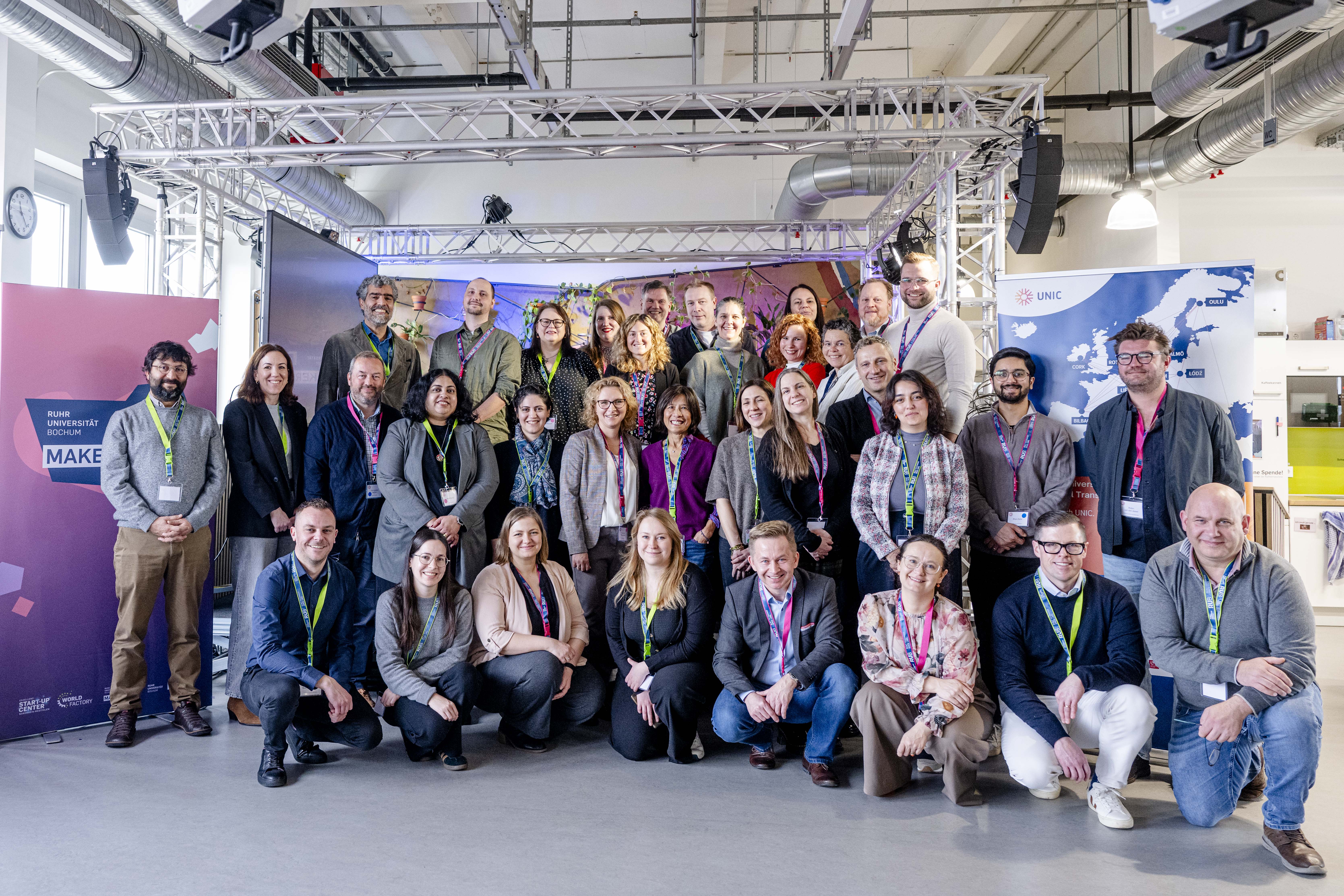
Building future collaborations: UNIC alliance hosts research networkin...
Researchers and research support experts from across the UNIC European University alliance gat...
13 Mar 2026
Read more »
Doctoral Researcher Erich Berger presented research on the social impa...
Third-year doctoral researcher in cultural anthropology, Erich Berger, presented his research ...
12 Mar 2026
Read more »